
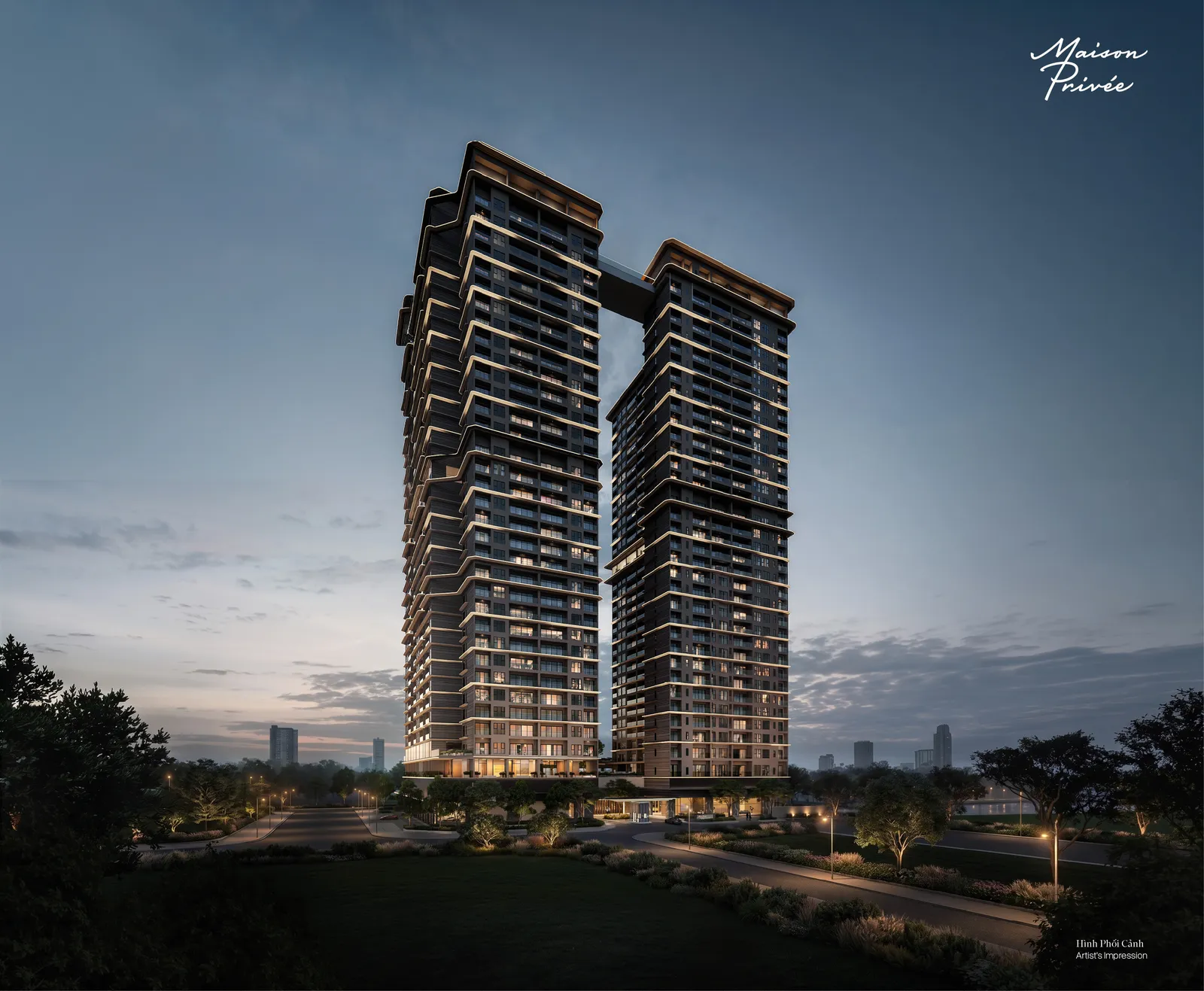
Buying an Off-Plan Apartment: 5 Things to Check Under the 2023 Law on Real Estate Business
Buying an apartment that is not finished yet? 5 points to review under the 2023 Law on Real Estate Business: sales eligibility document, guarantee, deposit, payments, mortgage.

Contents
Buying an apartment while the project is still under construction (which the law calls housing formed in the future) gives buyers better prices and a more comfortable payment schedule. In return, the buyer pays for an asset that does not yet exist, so the risk is higher than buying a ready-made home.
Law on Real Estate Business No. 29/2023/QH15 (in force from 1 August 2024 under Law No. 43/2024/QH15) and Decree No. 96/2024/NĐ-CP set out many safeguards to protect buyers. Below are 5 points to check yourself before committing money.
Quick summary
- Document confirming the housing is eligible for sale — Legal milestone: The provincial agency responds within 15 days; Basis: Article 24 of the 2023 Law on Real Estate Business; Article 8 of Decree 96/2024
- Bank guarantee — Legal milestone: Receive the guarantee letter before making any payment; Basis: Article 26 of the 2023 Law on Real Estate Business
- Deposit — Legal milestone: At most 5% of the sale price, only once business conditions are met; Basis: Clause 5, Article 23 of the 2023 Law on Real Estate Business
- Payment schedule — Legal milestone: First payment ≤ 30%; before handover ≤ 70% (≤ 50% if the seller has foreign investment capital); before the certificate is issued ≤ 95%; Basis: Article 25 of the 2023 Law on Real Estate Business
- Contract and mortgage — Legal milestone: Contract in the Government's standard form; a mortgaged project or apartment must be released from the mortgage before signing; Basis: Article 44 of the 2023 Law on Real Estate Business; Clause 2, Article 183 of the 2023 Housing Law
1. Document confirming the housing is eligible for sale
Under Article 24 of the 2023 Law on Real Estate Business, off-plan housing may be put on sale only when it meets this group of conditions:
- Construction has started.
- It has one of the documents on land use rights (a decision on land allocation, land lease, or permission to change the land use purpose, or a Certificate).
- It has a construction permit (if one is required) and a technical infrastructure acceptance record according to the schedule. For apartment buildings or mixed-use buildings with housing, it must have a record of foundation completion acceptance.
- It belongs to a project approved for construction for sale or lease-purchase.
Most important is Clause 4, Article 24: before selling, the developer must send a written notice to the provincial state management agency for real estate business (in Hanoi, the Department of Construction). That agency has 15 days to check and reply in writing on whether the housing is eligible or not. Detailed dossiers and procedures are in Article 8 of Decree No. 96/2024/NĐ-CP.
How to check: ask the developer or distributor to show you the Department of Construction's reply, and match the project name, building and number of units for sale exactly.
2. Bank guarantee
Article 26 of the 2023 Law on Real Estate Business requires the developer to obtain a guarantee commitment from a domestic commercial bank or a foreign bank branch before selling. If the developer fails to hand over the home as committed, the bank performs the financial obligation instead, including the money the buyer has paid in advance and other amounts under the contract.
Three points buyers need to remember:
- When signing the contract, the developer must hand over a copy of the bank's guarantee commitment document (Clause 2).
- The buyer may choose whether or not to receive the guarantee; if not, this must be clearly stated in the contract (Clause 3).
- The developer must hand over the guarantee letter within 10 working days of signing (or another period agreed by the parties) and may only collect money after the buyer has received the guarantee letter (Clause 6).
The guarantee rule does not apply to social housing (Clause 8).
3. Deposit: at most 5% and at the right time
Clause 5, Article 23 of the 2023 Law on Real Estate Business provides that the developer may collect a deposit of no more than 5% of the sale or lease-purchase price, and only when the housing meets the conditions to be put on sale. The deposit agreement must clearly state the sale or lease-purchase price.
In other words, if the project does not yet have the eligibility document from item 1, "reservations" or "deposits" that take money from buyers are a warning sign. Clause 4, Article 23 also prohibits the developer from authorizing another party to sign a deposit agreement or a sale contract.
4. Limits on each payment installment
Article 25 of the 2023 Law on Real Estate Business sets a ceiling on collecting money:
- First payment (including the deposit): no more than 30% of the contract value.
- Later payments according to the construction schedule, totaling no more than 70% before handover. If the seller is an economic organization with foreign investment capital, this level is 50%.
- When the buyer has not yet been issued a Certificate: the seller collects no more than 95%. The remainder is paid once the state agency has issued the Certificate.
For lease-purchase, the first payment is also no more than 30%, and total advance payments until handover are no more than 50%.
How to check: add up the payment schedule in the contract, see whether any installment exceeds the ceiling, and whether it is tied to actual construction progress.
5. Standard contract, notarization and mortgage
Contract: Clause 7, Article 44 of the 2023 Law on Real Estate Business assigns the Government to issue standard contracts. The current templates are in the appendices to Decree No. 96/2024/NĐ-CP. When one party is a real estate business enterprise (usually the developer), notarization or certification of the contract is as agreed by the parties, not mandatory (Clause 4). A sale contract between two individuals must be notarized or certified (Clause 5).
Mortgage: Clause 1, Article 183 of the 2023 Housing Law allows the developer to mortgage part or all of the project, or housing within the project, at a credit institution to borrow capital for that same project. However, under Clause 2, Article 183, if it wants to sell or lease-purchase mortgaged housing, the developer must release that part of the project or that housing together with the land use rights from the mortgage before signing the contract with the customer (the law has separate exceptions for certain social housing cases in Article 88). That the housing has been released from the mortgage is clearly stated in the notice of housing eligible for sale issued by the provincial housing management agency, and the developer must hand this document to the customer when signing the contract. Buyers should read that document carefully to know whether the apartment they choose has been released from the mortgage.
What homebuyers should do
- View the Department of Construction's document confirming the housing is eligible for sale, matching the project name and building.
- Receive a copy of the guarantee commitment when signing the contract; with no guarantee letter yet, make no payment (unless you chose to forgo the guarantee and this is stated in the contract).
- Do not pay a deposit above 5%, and do not pay a deposit when the project does not yet meet business conditions.
- Review the payment schedule: first payment ≤ 30%, before handover ≤ 70%, with at least 5% held back until you receive the certificate.
- Compare the contract with the template in Decree No. 96/2024/NĐ-CP; terms that differ from the template should be clearly explained.
- Check in the eligibility-for-sale notice whether the apartment has been released from the mortgage.
- Make sure the deposit agreement and sale contract are signed by the developer itself, not by a party "authorized to sign".
If you are interested in the projects Tami Homes distributes in the Ciputra – Phú Thượng area, you can ask Tami to provide each project's legal file so you can cross-check against the checklist above.
Note: On 22 October 2026, the Government submitted the draft amended Law on Real Estate Business and the draft amended Housing Law to the National Assembly (2nd Session, 16th term). As of 23 October 2026, these two drafts had not yet been voted on and adopted, so the regulations above still apply. Some regulations may change once the new laws are adopted and take effect.
Reference documents
- Law on Real Estate Business No. 29/2023/QH15 dated 28 November 2023, National Assembly: https://vanban.chinhphu.vn/?pageid=27160&docid=209624
- Law No. 43/2024/QH15 dated 29 June 2024, National Assembly, amending the Land Law, Housing Law, Law on Real Estate Business and Law on Credit Institutions (bringing the 2023 Law on Real Estate Business into force from 1 August 2024): https://vanban.chinhphu.vn/?pageid=27160&docid=211201
- Housing Law No. 27/2023/QH15 dated 27 November 2023, National Assembly (Article 183 on mortgage): https://vanban.chinhphu.vn/?pageid=27160&docid=209627
- Decree No. 96/2024/NĐ-CP dated 24 July 2024, Government, detailing a number of articles of the Law on Real Estate Business (as amended by Decree No. 54/2026/NĐ-CP): https://vanban.chinhphu.vn/?pageid=27160&docid=210798
- Press Release No. 06, 2nd Session, 16th National Assembly (People's Representative Newspaper), 22 October 2026: https://daibieunhandan.vn/thong-cao-bao-chi-so-06-ky-hop-thu-2-quoc-hoi-khoa-xvi-10439539.html
This article is general information compiled from legal documents and does not replace legal advice. Updated on 23 October 2026.
For detailed project information and the latest sales policy, please contact TAMI REAL ESTATE via our hotline or leave your details below.
Free consultation
Need a project that fits your budget?
A TAMI advisor will give you detailed advice for your needs.
Get adviceRelated articles
View all news
Legal & Planning
Hanoi Capital Master Plan with a 100-Year Vision: The Key Points
Decision No. 2512/QĐ-UBND sets a multi-polar, multi-center structure with the Red River as the main axis. A summary of the points homebuyers should know.

Legal & Planning
Resolution No. 254/2025/QH15: Land Changes Applying from 1 January 2026
From 1 January 2026, land prices are calculated using the land price list and adjustment coefficient, and there are new cases of land recovery. A summary of what homebuyers need to know.

Legal & Planning
Decree No. 54/2026/NĐ-CP: What's New on Social Housing and Real Estate Trading Floors
Decree No. 54/2026/NĐ-CP amends 6 decrees on housing and real estate business: simpler social housing procedures, and trading floors that cease operating must notify the Department of Construction.