

Resolution No. 254/2025/QH15: Land Changes Applying from 1 January 2026
From 1 January 2026, land prices are calculated using the land price list and adjustment coefficient, and there are new cases of land recovery. A summary of what homebuyers need to know.

Contents
The 2024 Land Law had been running for more than a year when the National Assembly issued a further resolution to clear obstacles in its application. That is Resolution No. 254/2025/QH15, adopted on 11 December 2025 at the 10th session, in force from 1 January 2026. It is a short document of only 13 articles, but it touches on matters homebuyers often face: how land prices are calculated, when the State recovers land, how much it costs to convert garden land to residential land, and certificate issuance for buyers.
This article summarizes the main points according to the original text, together with the Government's guidance in Decree No. 49/2026/NĐ-CP.
How does Resolution 254 fit with the Land Law?
The Resolution does not replace the Land Law. It adds certain separate mechanisms for the places that are hard to implement. There is an important principle in Clause 3, Article 13: while the resolution is in force, if the resolution and a law provide differently on the same matter, the resolution applies.
So when reading a land regulation in 2026, buyers need to look at both the Land Law and Resolution 254, not just one document.
1. Land prices: the land price list and adjustment coefficient take center stage
This is the change with the widest impact.
The provincial People's Council decides the land price list
Under Clause 3, Article 7, the provincial People's Council decides the land price list, announced and applied from 1 January 2026, and amended and supplemented when needed. The list is prepared by land type, area and location. Where a digital cadastral map and a land price database exist, it can be prepared down to individual parcels (Clause 2, Article 7).
The land price list is the basis for many things (Clause 1, Article 7): calculating land use fees and land rent upon land allocation, land lease, change of purpose and recognition of land use rights; auction starting prices; calculating taxes, fees and charges related to land use; administrative fines; and compensation when the State recovers land.
The provincial People's Committee issues the land price adjustment coefficient
Article 8 defines the land price adjustment coefficient as the rate of increase or decrease in land price relative to the price in the land price list, by land type, area and location. The provincial People's Committee issues this coefficient, applicable from 1 January each year, and may amend it during the year or for specific areas and locations when needed.
Under Article 5, the price used to calculate land use fees and compensation are both based on the land price list and adjustment coefficient. If land is auctioned, the winning auction price is used. A small but practical point: decisions on land allocation, land lease and change of purpose do not have to state the land price (Clause 4, Article 5).
The 1 July 2026 deadline
Clause 5, Article 7 requires competent authorities to issue all the bases for calculating land use fees, land rent and compensation no later than 1 July 2026. Until the bases are complete, calculations still follow the Land Law. That deadline has now passed. If you have a dossier that gave rise to a financial obligation in the first half of 2026, you should ask the tax authority how your dossier is being calculated.
For cases that should have had a specific land price determined but had no price decision by 1 January 2026, the provincial People's Committee may choose to apply the new method or continue with specific valuation (Clause 4, Article 7).
2. Land recovery, compensation, resettlement
Article 3 adds some cases in which the State recovers land, such as projects in free trade zones and international financial centers. Notable for commercial housing projects: if the developer negotiates on its own to receive land use rights, and after the negotiation period has expired has reached over 75% of the area and over 75% of the land users, the provincial People's Council may consider recovering the remainder to allocate it to the developer (Point b, Clause 2, Article 3). Those with land in the remaining portion receive extra payment if their compensation is lower than the average of the agreed prices (Clause 7, Article 3).
On procedure, Clause 9, Article 3 provides:
- The recovery notice is sent at least 60 days in advance for agricultural land and 120 days for non-agricultural land.
- The compensation plan is posted publicly for 10 days.
- If there are still objections, a dialogue is held within no more than 30 days of the date comments were collected.
Housing that must be fully demolished, or partly demolished with the remainder not meeting technical standards, is compensated at the new construction value of the whole building at an equivalent standard (Point a, Clause 11, Article 3).
3. Converting garden and pond land to residential land
For garden land, pond land and agricultural land within the same parcel as residential land, Point c, Clause 2, Article 10 sets the land use fee on the difference between the residential land price and the agricultural land price:
- 30% of the difference for the area within the residential land allocation limit;
- 50% for the area exceeding the limit but not more than 1 times the limit;
- 100% for the area exceeding 1 times the limit.
This rate applies only once per household or individual (calculated on 1 parcel). Those who were permitted to change purpose between 1 August 2024 and before 1 January 2026 are recalculated at the new rate. If the recalculated amount is lower than what was paid, the difference is refunded or offset against other obligations (Clause 10, Article 4).
4. Certificates (red book), parcel splitting and merging
Some points in Article 11 relate directly to buyers:
- If the Housing Law or the Law on Real Estate Business sets a deadline for filing a Certificate dossier for the buyer that differs from the deadline for registering changes under the Land Law, then the Housing Law or the Law on Real Estate Business applies (Point c, Clause 2).
- Splitting or merging parcels requires access to a public road or the consent of the adjoining neighbor to pass through. Residential land set aside as an access way does not have to change purpose. Merged parcels do not have to share the same use purpose (Clause 3).
What does Decree No. 49/2026/NĐ-CP guide?
The Government issued Decree No. 49/2026/NĐ-CP on 31 January 2026, effective the same day. Some main points:
- The land price adjustment coefficient has three types: by market fluctuation, by planning, and by other factors affecting land prices (Clause 1, Article 8).
- The market fluctuation coefficient equals the market land price divided by the price in the land price list. The market price is taken from at least 3 sample parcels that have been traded, won at auction or had a price approved (Clause 3, Article 8).
- The planning coefficient is calculated by land type and the project's land use coefficient (Clause 4, Article 8).
- Article 5 lists the cases in which the land price list is not used and a specific valuation is made instead, such as sea reclamation projects or mixed-purpose projects decided by the provincial People's Committee.
- Detailed provisions on land use fees and land rent are assigned to a separate decree (Clause 2, Article 1). That is Decree No. 50/2026/NĐ-CP detailing a number of articles of Resolution 254/2025/QH15 on land use fees and land rent (see Reference documents).
- Chapter IV on decentralization and delegation is implemented through 28 February 2027 (Clause 2, Article 16).
Quick summary
- Resolution No. 254/2025/QH15 — Effective date: 1 January 2026; Decided by: National Assembly; Applies to: Mechanisms to clear obstacles in implementing the Land Law
- Land price list — Effective date: Applied from 1 January 2026, amended when needed; Decided by: Provincial People's Council; Applies to: Land use fees, land rent, taxes and fees, compensation, auction starting prices
- Land price adjustment coefficient — Effective date: From 1 January each year, amended during the year when needed; Decided by: Provincial People's Committee; Applies to: Multiplied by the price in the land price list to give the price used for calculation
- Issuing all bases for calculation — Effective date: No later than 1 July 2026; Decided by: Competent local authority; Applies to: Land use fees, land rent, compensation
- Decree No. 49/2026/NĐ-CP — Effective date: 31 January 2026; Decided by: Government; Applies to: Guidance on the price list, coefficients, land recovery, procedures
- Chapter IV of Decree 49 — Effective date: Implemented through 28 February 2027; Decided by: Government; Applies to: Decentralization and delegation in land matters
What homebuyers should do
- Look up the current land price list and adjustment coefficient in the province or city where the property is located before working out transaction costs.
- For residential land with garden or pond areas: ask clearly about the area within the allocation limit and the 30/50/100% rates before changing the purpose.
- For apartments and homes in a project: ask the developer about the status of land allocation, the project's land-related financial obligations and the progress of certificate processing.
- If the land lies in an area that may be recovered: follow the recovery notice and the posting period for the compensation plan so you can submit comments in time.
- Dossiers that gave rise to obligations in 2026: ask the tax authority what basis it is calculating on.
If you are looking into homes with clear legal status in the Ciputra area, Phú Thượng, you can view the projects Tami distributes at Ciputra such as Maison Privée, Astor 1 and The Windsor Collection.
Reference documents
- Resolution No. 254/2025/QH15 dated 11 December 2025 of the National Assembly on certain mechanisms and policies to resolve difficulties and obstacles in implementing the Land Law. Full text published on the portal hcc.nghean.gov.vn
- Decree No. 49/2026/NĐ-CP dated 31 January 2026 of the Government detailing and guiding the implementation of a number of articles of Resolution 254/2025/QH15. Full text: Government Electronic Portal
- Decree No. 50/2026/NĐ-CP of the Government detailing a number of articles of Resolution 254/2025/QH15 on land use fees and land rent. Full text: Government Electronic Portal
- Land Law No. 31/2024/QH15 of the National Assembly (as amended and supplemented by Laws No. 43/2024/QH15, 47/2024/QH15, 58/2024/QH15, 71/2025/QH15, 84/2025/QH15, 93/2025/QH15, 95/2025/QH15). Original text: Government Electronic Portal
This article is general information compiled from legal documents and does not replace legal advice. Updated on 23 October 2026.
For detailed project information and the latest sales policy, please contact TAMI REAL ESTATE via our hotline or leave your details below.
Free consultation
Need a project that fits your budget?
A TAMI advisor will give you detailed advice for your needs.
Get adviceRelated articles
View all news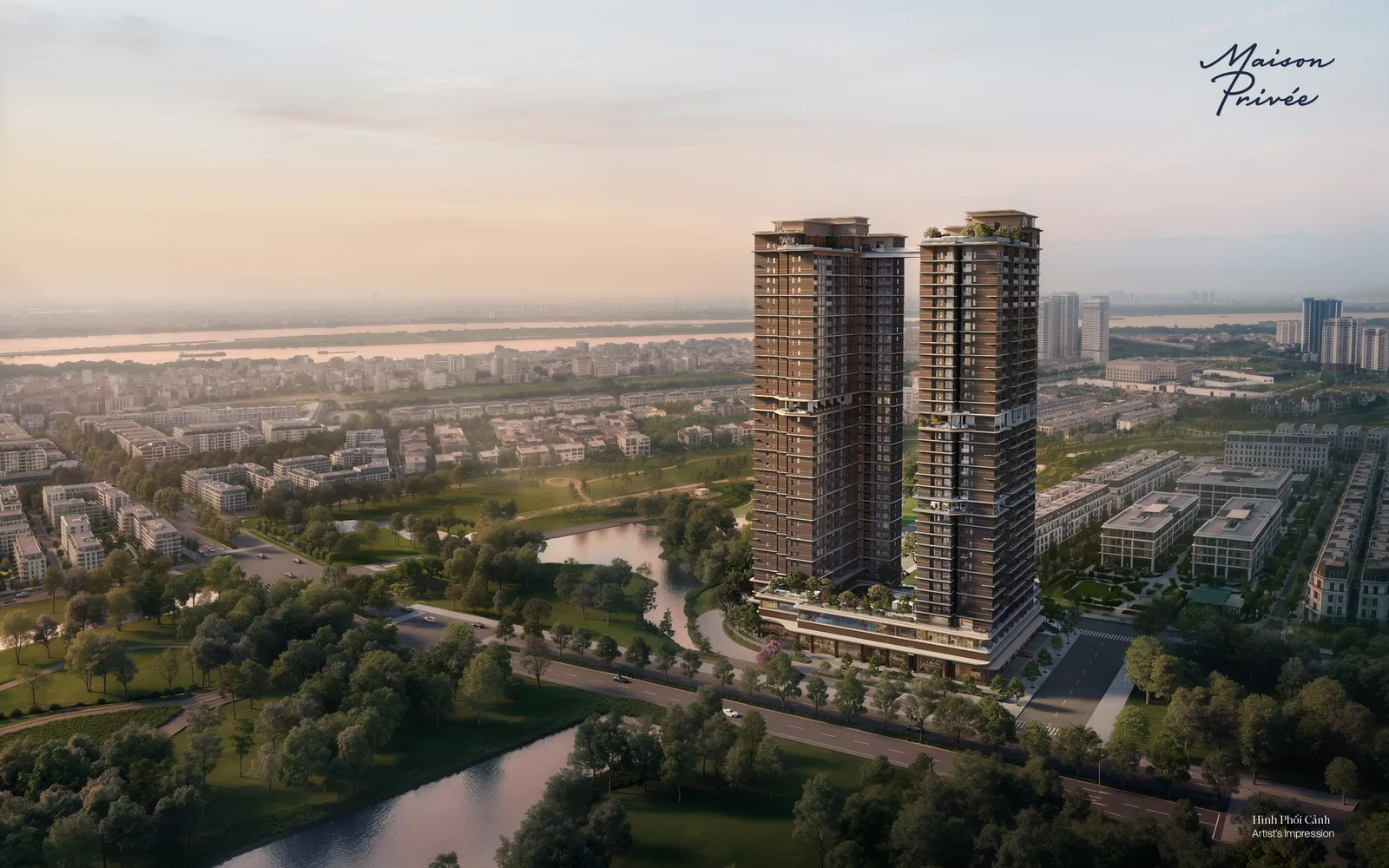
Legal & Planning
Hanoi Capital Master Plan with a 100-Year Vision: The Key Points
Decision No. 2512/QĐ-UBND sets a multi-polar, multi-center structure with the Red River as the main axis. A summary of the points homebuyers should know.
Legal & Planning
Decree No. 54/2026/NĐ-CP: What's New on Social Housing and Real Estate Trading Floors
Decree No. 54/2026/NĐ-CP amends 6 decrees on housing and real estate business: simpler social housing procedures, and trading floors that cease operating must notify the Department of Construction.
Legal & Planning
Buying an Off-Plan Apartment: 5 Things to Check Under the 2023 Law on Real Estate Business
Buying an apartment that is not finished yet? 5 points to review under the 2023 Law on Real Estate Business: sales eligibility document, guarantee, deposit, payments, mortgage.