

Land Price Lists and Land Price Adjustment Coefficients 2026: What Homebuyers Need to Understand
The land price list and the K coefficient determine many payments when you buy or sell property, change land use purpose, or have land recovered. How to read them correctly under the 2026 rules in Hanoi.

Contents
When looking at a house or a plot of land, buyers usually care only about the asking price. But there is another price, set by the State, that quietly determines many amounts you must pay or receive: the price in the land price list, together with the land price adjustment coefficient (commonly called the K coefficient in Hanoi).
From 2026, these two tools are used more widely than before under Resolution No. 254/2025/QH15 of the National Assembly. This article explains what they are, what they are used for, and how Hanoi is applying them.
What is the land price list?
The land price list is a table of prices set by the State for each type of land, by area and location. Where a digital cadastral map and a land price database exist, the list can go down to the level of individual land parcels (Clause 2, Article 7 of Resolution 254).
From 1 January 2026, the provincial People's Council decides the land price list and may amend and supplement it when needed (Clause 3, Article 7). Decree No. 49/2026/NĐ-CP lists the cases in which the list may be amended or supplemented, for example when administrative boundaries or street names change, or when a price needs to be added for a street not yet in the list (Article 6).
Keep in mind: the price in the list is the price used to calculate obligations and entitlements toward the State, not the actual transaction price between buyer and seller.
What is the land price list used for?
Clause 1, Article 7 of Resolution 254 lists the purposes for which the land price list serves as a basis. Below are the ones homebuyers are most likely to encounter.
Land use fees
When land is allocated, land use rights are recognized, or the use purpose is changed to residential land, the land use fee is calculated based on the area, the price in the land price list and the adjustment coefficient, exemption and reduction policies, and some other factors (Clause 1, Article 5). If the land is auctioned, the price used is the winning auction price.
Converting garden or pond land to residential land
For garden or pond land within the same parcel as residential land, the land use fee is calculated on the difference between the residential land price and the agricultural land price, both taken from the land price list: 30% for the portion within the allocation limit, 50% for the portion exceeding the limit by up to 1 times the limit, and 100% for the portion exceeding that (Point c, Clause 2, Article 10). The higher the price list, the larger this difference.
Taxes, fees and charges
The land price list is the basis for calculating taxes, fees and charges related to land use (Clause 1, Article 7). In a sale, the two familiar items are the seller's personal income tax and the buyer's registration fee. Which price is used for each item (the price stated in the contract or the price in the list) is governed separately by tax and fee law; buyers and sellers should ask the tax authority or a notary office how the calculation applies to their specific transaction.
Compensation when the State recovers land
Land compensation is calculated according to the price in the land price list and the adjustment coefficient (Clause 6, Article 3 and Clause 3, Article 5). The price of residential land at the resettlement site is calculated the same way.
What is the land price adjustment coefficient (K coefficient)?
Under Article 8 of Resolution 254, it is the rate of increase or decrease relative to the price in the land price list for each type of land, area and location. The provincial People's Committee issues the coefficients, applicable from 1 January each year, and may amend them during the year.
In simple terms: price used for calculation = price in the land price list × coefficient. A coefficient of 1 means the list price is kept as is. A coefficient above 1 means the price used is higher than the list price.
Decree No. 49/2026/NĐ-CP (Article 8) divides the coefficients into three types:
- Market fluctuation coefficient: the market price divided by the price in the land price list. The market price is the average of at least 3 sample land parcels that have been transferred, won at auction, or had their price approved by a competent authority.
- Planning coefficient: calculated according to the land type and the land use coefficient of the project.
- Other-factor coefficient: determined by the locality according to actual conditions.
How is Hanoi applying them?
Land price list: Resolution No. 52/2025/NQ-HĐND
The Hanoi City People's Council issued Resolution No. 52/2025/NQ-HĐND dated 26 November 2025 on the first land price list, applicable from 1 January 2026, published in the Hanoi Official Gazette. The list is divided by area, each area covering a group of wards and communes. For non-agricultural land, each street has prices for residential land, commercial and service land, and non-agricultural production and business land, each divided into 4 locations (VT1 to VT4).
Adjustment coefficient: Decision No. 19/2026/QĐ-UBND
The City People's Committee issued Decision No. 19/2026/QĐ-UBND dated 2 February 2026, effective the same day, based on Article 8 of Resolution 254. This decision repeals Article 1 of Decision No. 89/2025/QĐ-UBND. According to the content published on the Government portal:
- For calculating compensation when the State recovers land: K = 1.
- For calculating fees, taxes and charges in the cases under Clause 1, Article 159 of the Land Law: K = 1.
- Industrial projects, industrial clusters, auction starting prices and some projects under Clause 1, Article 160 of the Land Law (without mixed purposes): market coefficient K = 1; planning coefficient in the form K = 1.x (the specific value of x is in the full text of Decision No. 19/2026/QĐ-UBND); other-factor coefficient K = 1.1 for projects using commercial and service land, new urban areas, auction areas, and commercial housing areas near administrative, commercial, cultural and sports centers, educational facilities, parks, entertainment areas and scenic sites, and K = 1 for the rest.
For most individual residential transactions, K = 1 means the price used is exactly the price in the land price list. To find the specific figure, look up the street name, street section and land parcel location in the appendix of Resolution 52.
Quick summary
- Land price list (general framework) — Effective date: 1 January 2026; Decided by: provincial People's Council (Article 7 of Resolution 254); Applies to: Land use fees, land lease, taxes and fees, compensation, auction starting prices
- Land price adjustment coefficient (general framework) — Effective date: 1 January each year; Decided by: provincial People's Committee (Article 8 of Resolution 254); Applies to: Upward or downward adjustment relative to the list price
- How coefficients are calculated — Effective date: 31 January 2026; Decided by: Government (Article 8 of Decree 49/2026); Applies to: Three types of coefficients: market, planning, other factors
- Hanoi land price list — Effective date: 1 January 2026; Decided by: Hanoi People's Council (Resolution 52/2025/NQ-HĐND); Applies to: Prices by street and location in Hanoi
- Hanoi K coefficient — Effective date: 2 February 2026; Decided by: Hanoi People's Committee (Decision 19/2026/QĐ-UBND); Applies to: K = 1 for compensation and fees, taxes and charges; separate levels for some projects
What homebuyers should do
- Identify the land parcel's ward or commune, street, and location VT1 to VT4, then look up the corresponding appendix of the land price list.
- Check the K coefficient currently in force on the date of signing the contract or the date of the decision, because the People's Committee may amend the coefficient during the year.
- Ask the tax authority or a notary office how to calculate personal income tax and registration fees correctly for your transaction.
- Land with garden or pond areas: first work out the difference between the residential and agricultural land prices according to the land price list.
- Buying a home in a project: ask the developer about the project's status in completing its land-related financial obligations.
If you are considering a home in the Ciputra area, Phú Thượng, you can view the projects Tami distributes at Ciputra such as Maison Privée, Astor 1 and The Windsor Collection for specific advice.
Reference documents
- Resolution No. 254/2025/QH15 dated 11 December 2025 of the National Assembly on certain mechanisms and policies to resolve difficulties and obstacles in implementing the Land Law, effective from 1 January 2026.
- Decree No. 49/2026/NĐ-CP dated 31 January 2026 of the Government detailing and guiding the implementation of a number of articles of Resolution 254/2025/QH15. Full text: Government Electronic Portal
- Resolution No. 52/2025/NQ-HĐND dated 26 November 2025 of the Hanoi City People's Council on the first Land Price List to be announced and applied from 1 January 2026. Version published in the Hanoi Official Gazette (issues 393+394, appendix for area 2): datafiles.hanoi.gov.vn
- Decision No. 19/2026/QĐ-UBND dated 2 February 2026 of the Hanoi City People's Committee on promulgating the land price adjustment coefficients in Hanoi City: vanban.hanoi.gov.vn; content summary at xaydungchinhsach.chinhphu.vn
- Land Law No. 31/2024/QH15 of the National Assembly (as amended and supplemented). Look up at: Government Electronic Portal
This article is general information compiled from legal documents and does not replace legal advice. Updated on 23 October 2026.
For detailed project information and the latest sales policy, please contact TAMI REAL ESTATE via our hotline or leave your details below.
Free consultation
Need a project that fits your budget?
A TAMI advisor will give you detailed advice for your needs.
Get adviceRelated articles
View all news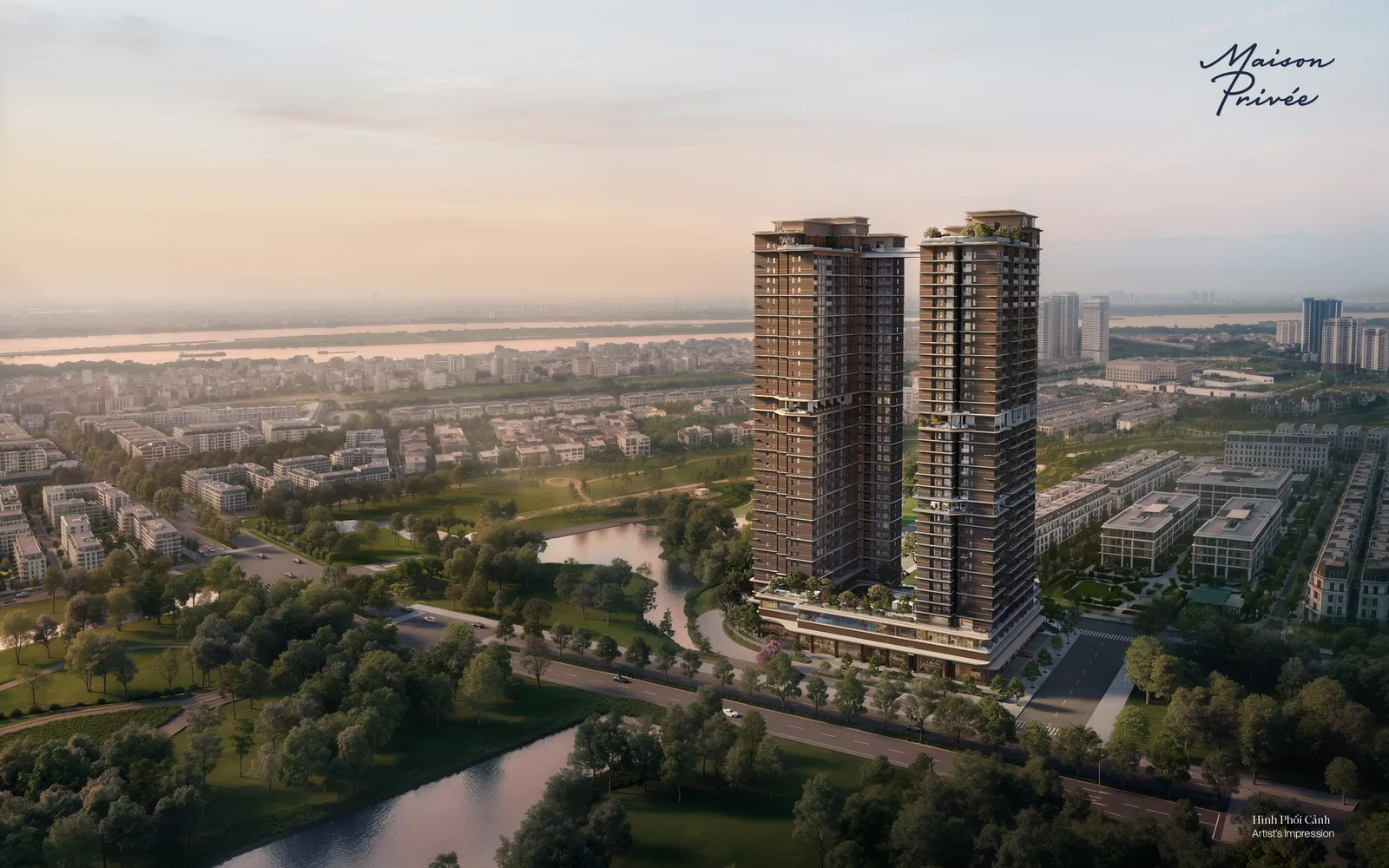
Legal & Planning
Hanoi Capital Master Plan with a 100-Year Vision: The Key Points
Decision No. 2512/QĐ-UBND sets a multi-polar, multi-center structure with the Red River as the main axis. A summary of the points homebuyers should know.

Legal & Planning
Resolution No. 254/2025/QH15: Land Changes Applying from 1 January 2026
From 1 January 2026, land prices are calculated using the land price list and adjustment coefficient, and there are new cases of land recovery. A summary of what homebuyers need to know.

Legal & Planning
Decree No. 54/2026/NĐ-CP: What's New on Social Housing and Real Estate Trading Floors
Decree No. 54/2026/NĐ-CP amends 6 decrees on housing and real estate business: simpler social housing procedures, and trading floors that cease operating must notify the Department of Construction.